
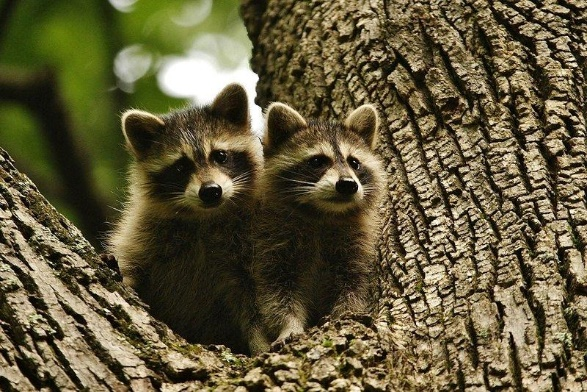
 Raccoons are found throughout the United States. The Algonquin Indians called the raccoons “arakinem”, which means “he scratches with his hands”. The average adult raccoon weighs 12-15 pounds but can reach 30 pounds.
Raccoons are excellent climbers and have keen vision and hearing. Their vision is adapted to its nocturnal activities. Raccoon language ranges from the churring, trilling, and purring of the young to the screams, snarls, and growls of the adult. They are curious, intelligent, and adaptable to a variety of environments.
Raccoons prefer to live in mature woodland areas but have had to adapt to the rapid pace of human development. They have been forced to seek shelter in uncapped chimneys, attics, under porches, and yard buildings.
In the spring, a pregnant female will select a den days before the babies are born. A litter may contain 2-6 cubs. The cubs will remain with their mother until fall and often remain together as a group through their first winter.
Raccoons are classified as a rabies vector species, as they are one of the species considered to be a potential carrier of this disease. Other animals considered rabies vectors include bats, foxes, groundhogs, and skunks.
Raccoons may appear bold, but they are not usually aggressive with the exception of mating season or in defense of their young. However, their strength, teeth, and claws equip them to defend themselves effectively.